
How to Cook the Perfect Ribeye Steak at Home
A perfectly cooked ribeye doesn't need complicated ingredients. What it does need is a good piece of meat, a very hot pan, proper seasoning, and a little patience. The goal is simple: a deeply browned, flavorful crust on the outside, a juicy and tender center, and that unmistakable richness that makes ribeye such a special cut. Here are the techniques that make the difference
By Siso · · 4 min read
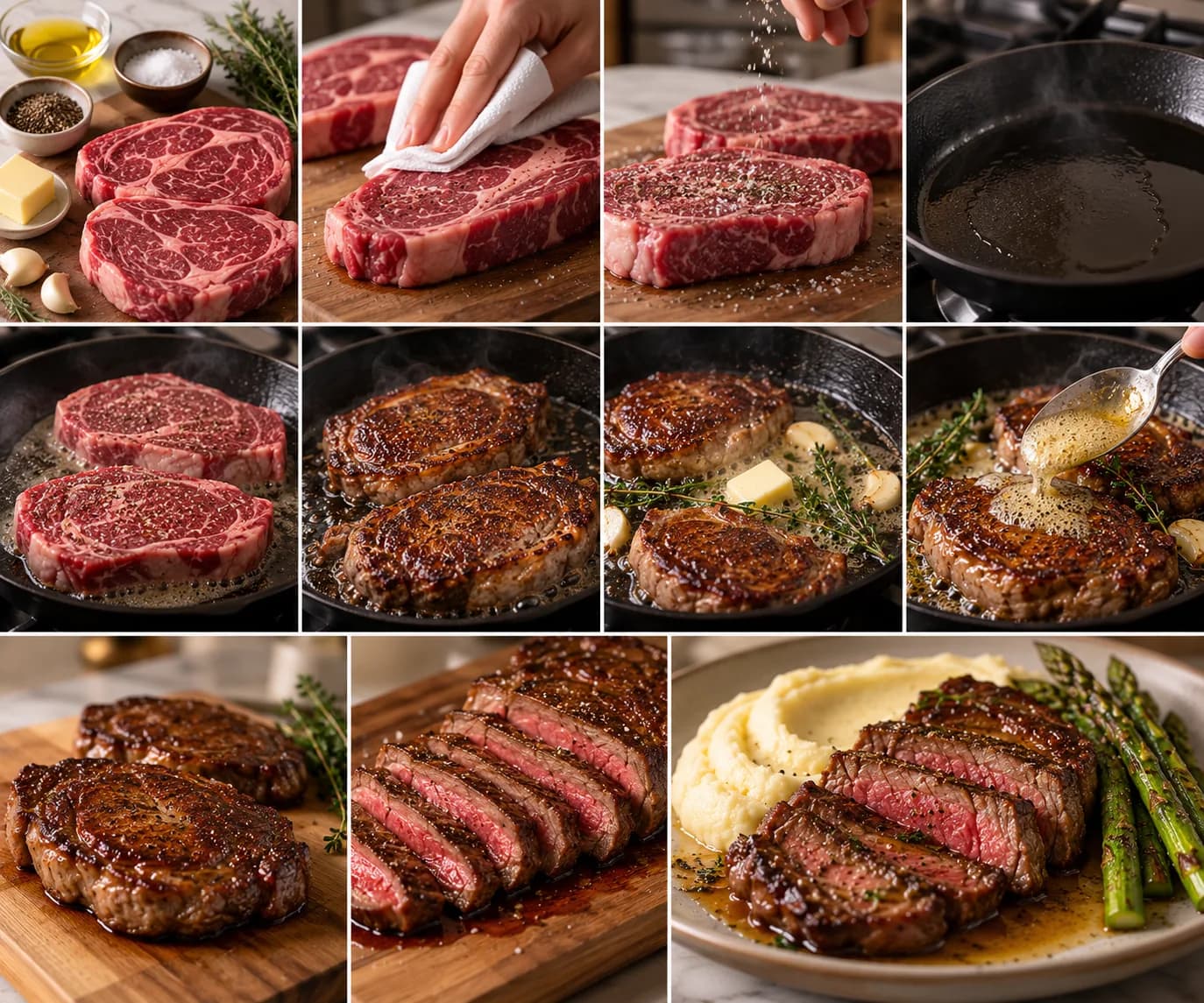
Ingredients
Serves 2
- 2 ribeye steaks, approximately 250–300 g each
- Salt
- Freshly ground black pepper
- 1 tbsp neutral oil
- 30 g unsalted butter
- 2 garlic cloves, lightly crushed
- 2 sprigs fresh thyme
- 1 sprig rosemary
Method
1. Start with a Good Ribeye
Choose steaks with good marbling — those little lines of fat running through the meat.
This intramuscular fat melts during cooking and helps give ribeye its rich flavor and juicy texture.
A steak that is around 2.5–3 cm thick is ideal for pan-searing.
2. Take the Chill Off
Take the steaks out of the refrigerator about 30 minutes before cooking.
Before they go into the pan, pat them very dry with paper towels.
This is important because a dry surface browns much more effectively than a wet one.
3. Season Generously
Season both sides generously with salt and freshly ground black pepper just before cooking.
Don't be afraid of the salt. A thick steak needs enough seasoning to properly flavor the meat.
4. Get the Pan Really Hot
Use a heavy skillet or cast-iron pan and heat it until it is very hot.
Add the neutral oil and carefully place the steaks into the pan.
You should hear an immediate, strong sizzle.
That sound is exactly what you're looking for.
5. Build the Crust
Leave the steak undisturbed for approximately 2–3 minutes, depending on its thickness and your desired level of browning.
Don't constantly move the steak around.
You want the surface to develop a deep, golden-brown crust through the Maillard reaction — the process responsible for those rich, roasted flavors.
Flip the steak and sear the other side.
6. Add the Butter and Aromatics
Once both sides have developed a beautiful crust, reduce the heat slightly.
Add the butter, crushed garlic, thyme and rosemary.
As the butter melts and begins to foam, tilt the pan slightly and repeatedly spoon the hot, aromatic butter over the steak.
This is where the steak picks up another layer of flavor.
Don't let the butter burn. If the pan is extremely hot, lower the heat before adding it.
7. Cook to Your Preferred Temperature
The most reliable way to cook steak is to use an instant-read thermometer.
For medium-rare, aim for approximately 52–54°C / 126–129°F after resting.
Remember that the internal temperature will continue to rise slightly while the steak rests.
8. Let It Rest
Transfer the steaks to a warm plate or board and let them rest for 5–10 minutes.
This step is easy to skip, but it shouldn't be.
Resting allows the juices to redistribute through the meat instead of running onto the cutting board the moment you slice into it.
9. Slice and Serve
If you're serving the steak sliced, cut it against the grain into thin slices.
This shortens the muscle fibers and makes each bite feel more tender.
Spoon some of the buttery pan juices over the steak and serve immediately
The Secrets to a Better Ribeye
Keep the Surface Dry
Moisture is the enemy of a good crust.
Patting the steak dry before seasoning helps the surface brown instead of steam.
Don't Move It Too Much
Once the steak hits the hot pan, let it do its thing.
Constantly flipping or moving it around makes it harder to develop that deeply browned crust.
Butter Comes Later
Don't add the butter at the beginning.
Butter can burn at the high temperature needed to sear the steak, so build your crust with oil first and add the butter toward the end for flavor.
Use a Thermometer
Time is only a guideline.
The thickness of the steak, the starting temperature of the meat and the heat of your pan can all change the cooking time.
Temperature tells you what is actually happening inside the steak.
Keep reading
More from the blog

Breakfast Around The World
One morning. Five cultures.
- 3 min read
 kitchen secrets
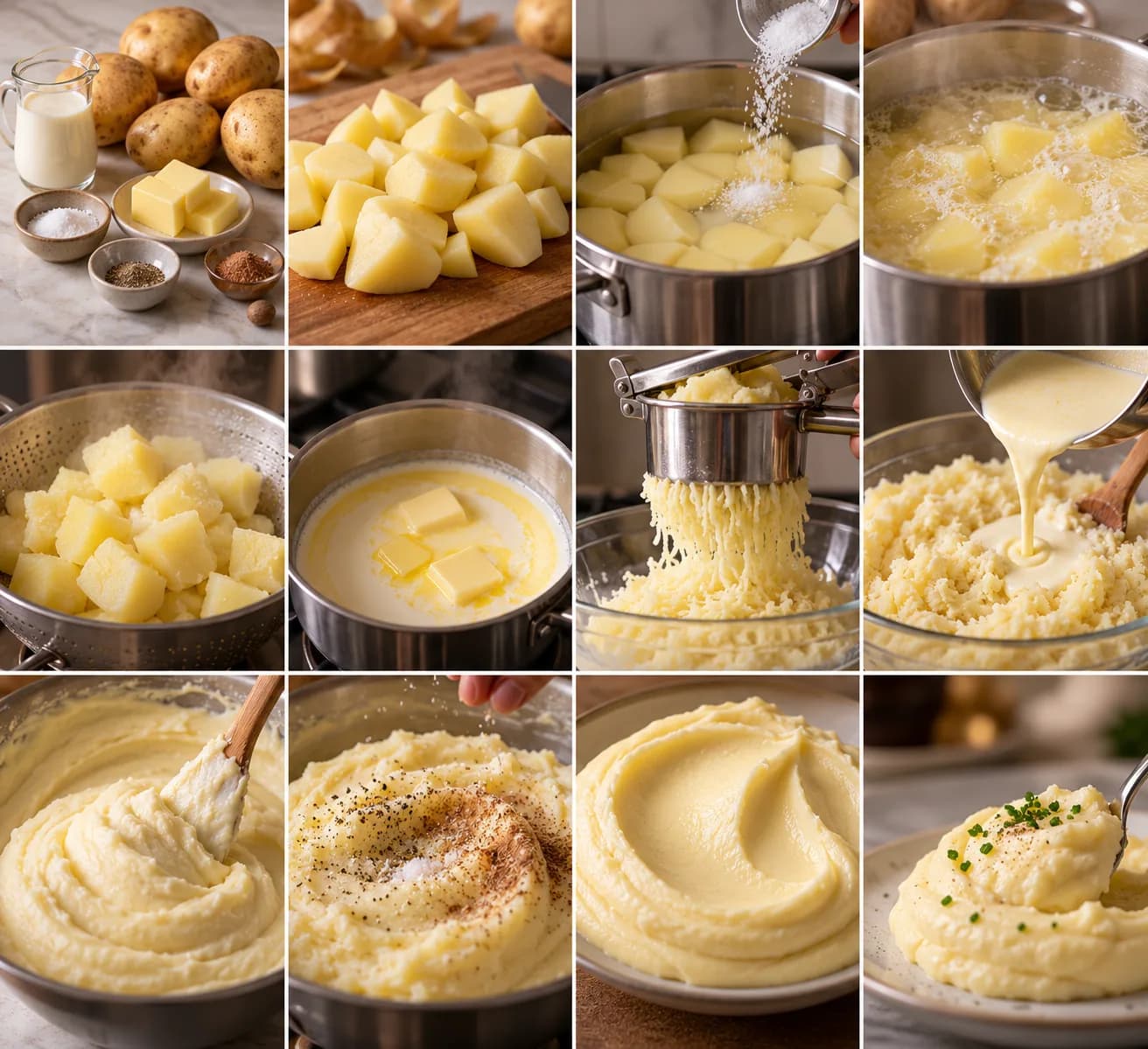
How to Make the Silkiest Creamy Potato Purée
A truly great potato purée should be smooth, silky and rich — never gluey, heavy or watery. It may look like one of the simplest things to make, but a few small details can completely change the final texture. The secret isn't complicated. Choose the right potatoes, keep them dry, and never overwork them.
- 4 min read
 kitchen secrets
Why Are My Pancakes Not Fluffy? 4 Secrets for Perfect Pancakes !
There is something incredibly satisfying about a stack of tall, golden pancakes — soft and fluffy in the center, lightly crisp around the edges, and ready to soak up a little butter and maple syrup. But getting that perfect, cloud-like texture isn't just about following a recipe. There are a few small techniques that make a big difference.
- 3 min read